IT threat evolution in Q2 2026. Mobile statistics
10.8.2026
SECURELIST
Mobil
The mobile section of the quarterly cyberthreat report includes statistics on
malware, adware, and potentially unwanted software for Android, as well as
descriptions of the most notable threats for Android and iOS discovered during
the reporting period. These statistics are based on detection alerts from
Kaspersky products, collected from users who consented to provide statistical
data to Kaspersky Security Network.
The quarter in figures
According to Kaspersky Security Network, in Q2 2026:
More than 1.99 million attacks on mobile devices utilizing malware, adware, or
unwanted mobile software were blocked.
The Trojan-Banker category was the most prevalent mobile malware threat with a
30.77% share of total detected applications.
More than 304,000 malicious installation packages were discovered, including:
93,574 packages were related to mobile banking Trojans;
570 packages were related to mobile ransomware Trojans.
Quarterly highlights
Attacks on mobile devices involving malware, adware, or unwanted software
continued their downward trend, falling to 1,996,823 in Q2 from 2,676,328 the
previous quarter.
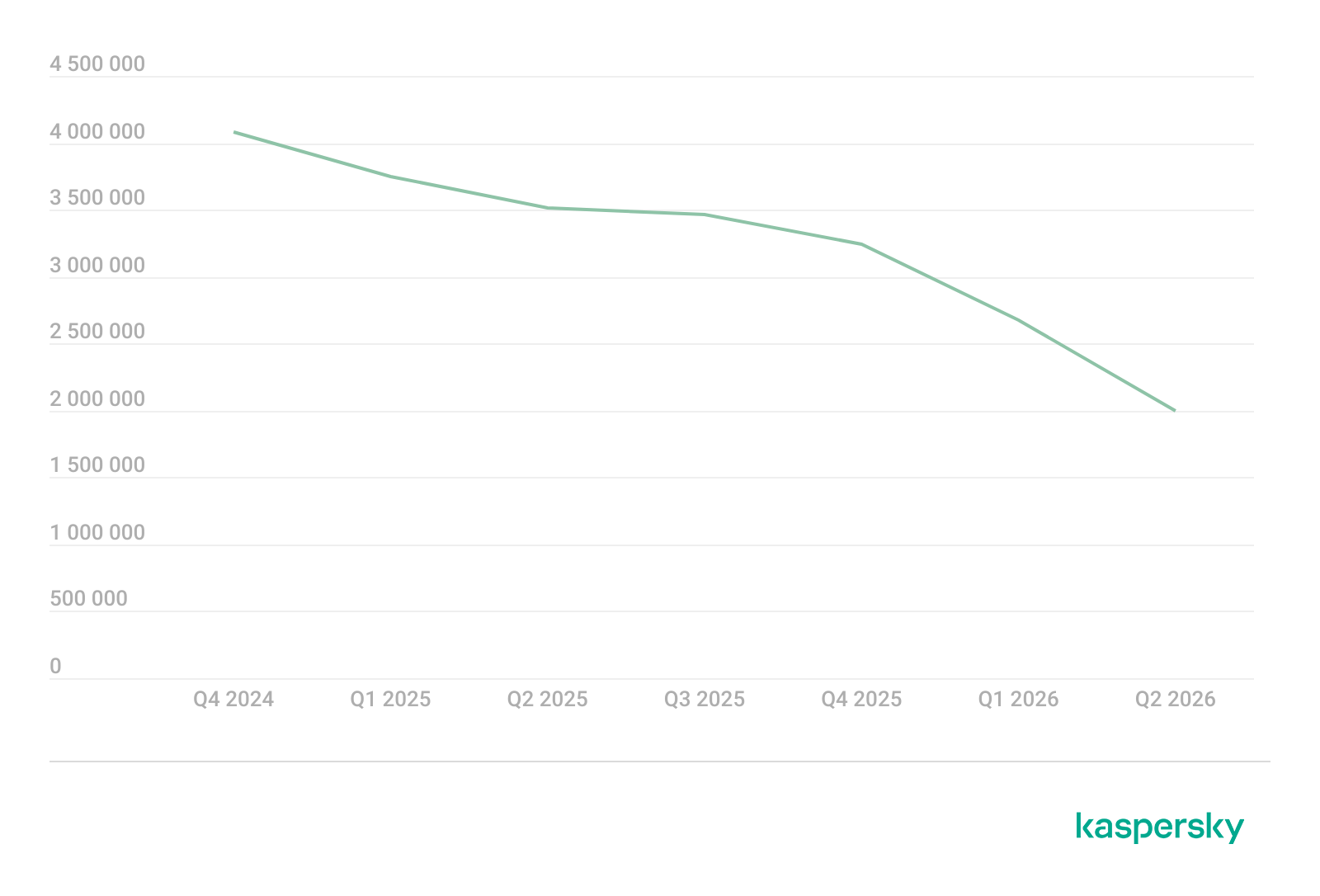
Attacks on users of Kaspersky mobile solutions, Q4 2024 — Q2 2026 (download)
We
noted a downward trend in attacks driven by specific strains of pre-installed
Trojans — a shift likely tied to the rollout of patched vendor firmware.
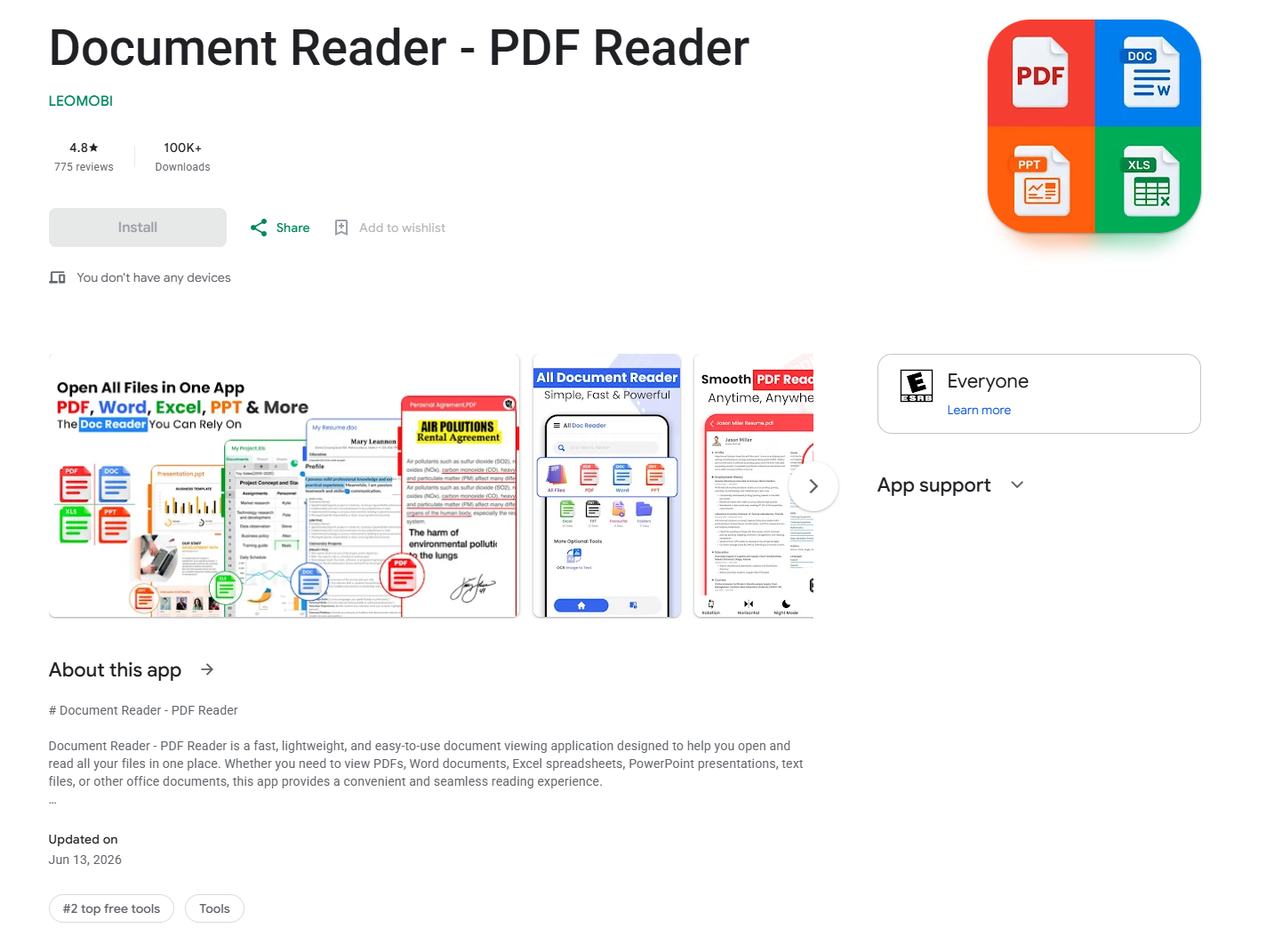
In
Q2, our telemetry uncovered multiple malicious loaders hosted directly on Google
Play. As highlighted in a prior report (link in Russian), one such instance
involved a PDF reader app trojanized to drop the Anatsa banking malware. Upon
execution, the app presented users with a fake request to install an update,
which served as a front to stage the banking Trojan on the victim’s device.
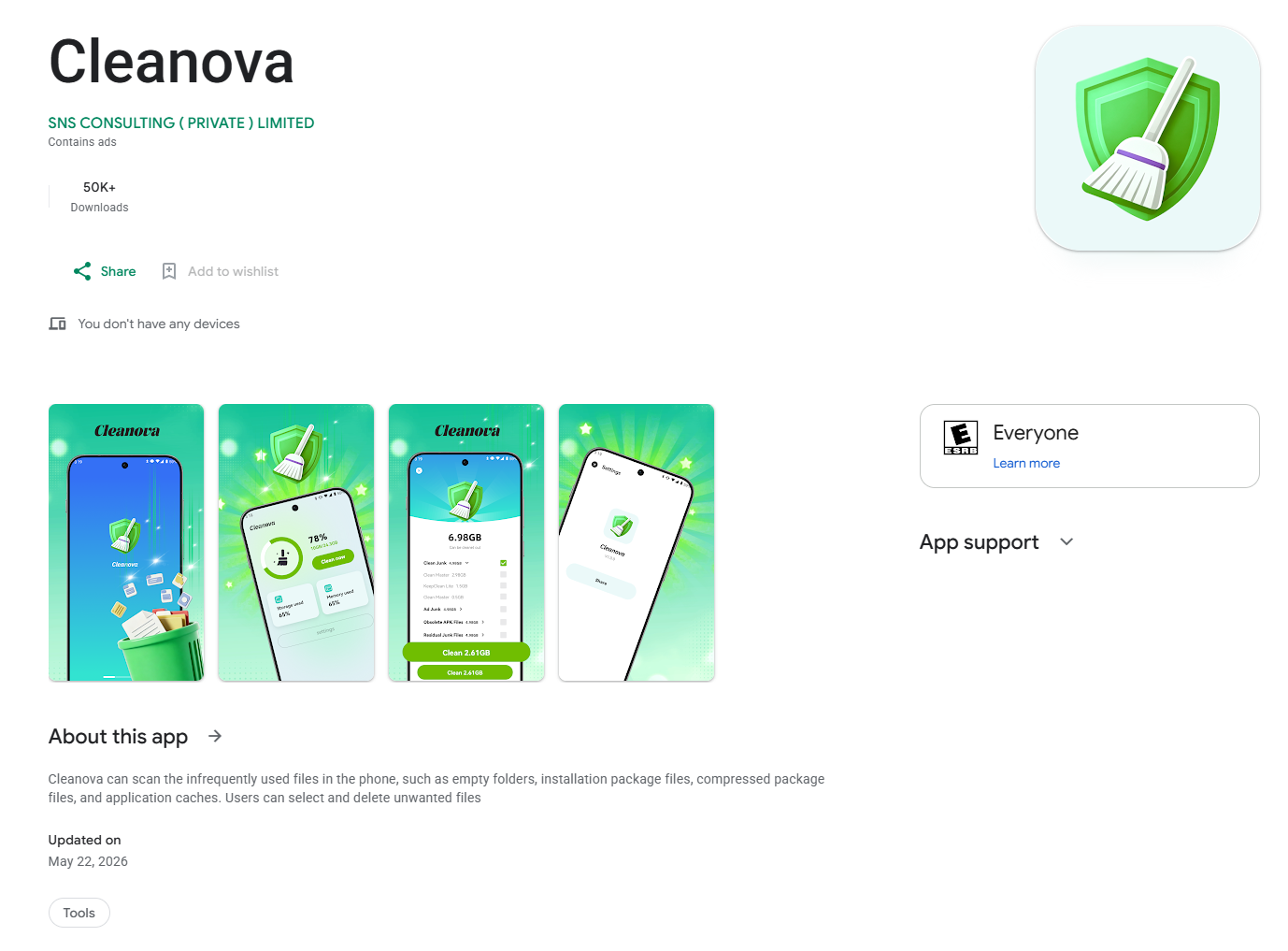
Another notable case involves a loader we detected in the Cleanova app alongside
several others. The malware sent requests to a command-and-control server
containing telemetry gathered from various SDKs that track the installation
source. A malicious payload was returned only for certain sources. This is a
fairly interesting method for bypassing app store review processes while
ensuring precise victim targeting. If an analytics SDK indicates that an
arbitrary installation originated from a source outside the threat actors’ scope,
the malicious logic remains dormant. This effectively hides the malware from app
store scanners.
Mobile threat statistics
In Q2, the number of Android malware samples totaled 304,128. It remained steady
compared to the previous reporting period.
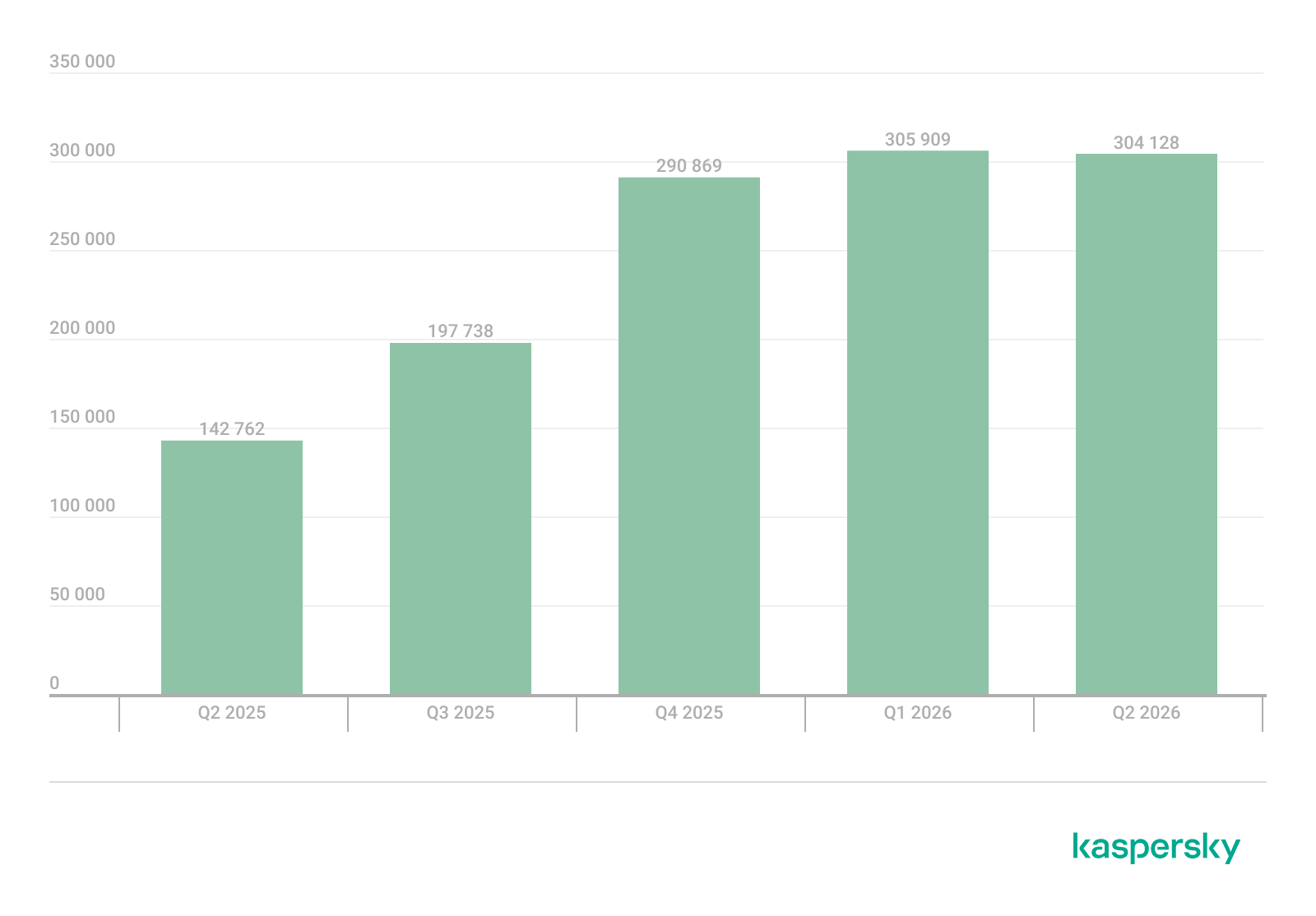
Detected malicious and potentially unwanted installation packages, Q2 2025 — Q2
2026 (download)
The detected installation packages were distributed by type as follows:
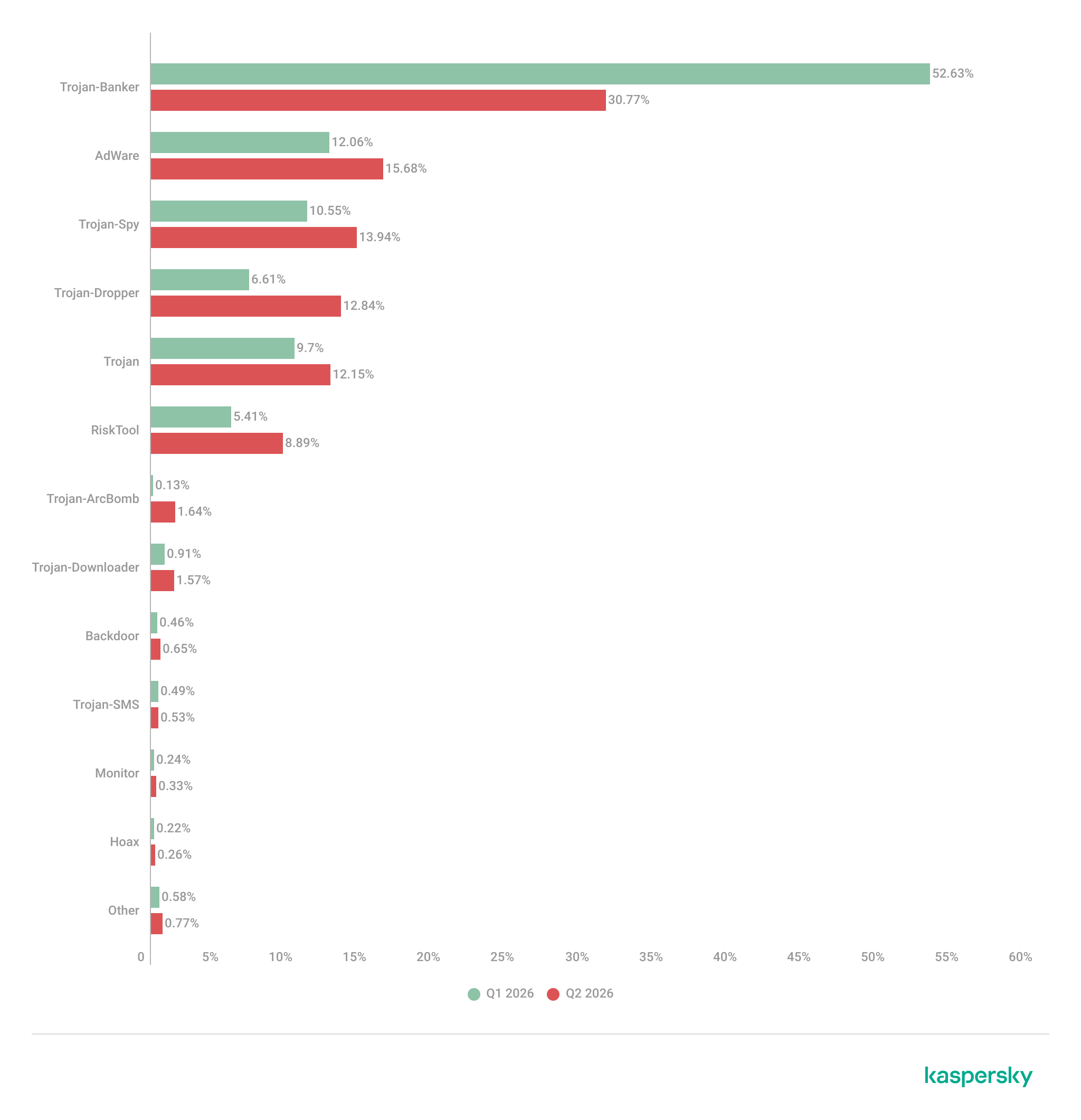
Detected mobile apps by type, Q1 — Q2 2026* (download)
*
Data for the previous quarter may differ slightly from previously published data
due to certain verdicts being retrospectively revised.
While the number of newly discovered banking Trojan variants fell precipitously,
they continued to dominate the threat landscape as they did in Q1. Notably, the
share of Creduz malware family among identified banking samples has grown
significantly despite low activity in victim telemetry. This discrepancy
suggests the threat actors are actively iterating on the malware — likely
testing new features or bypasses — by generating a high volume of builds before
staging a broader campaign.
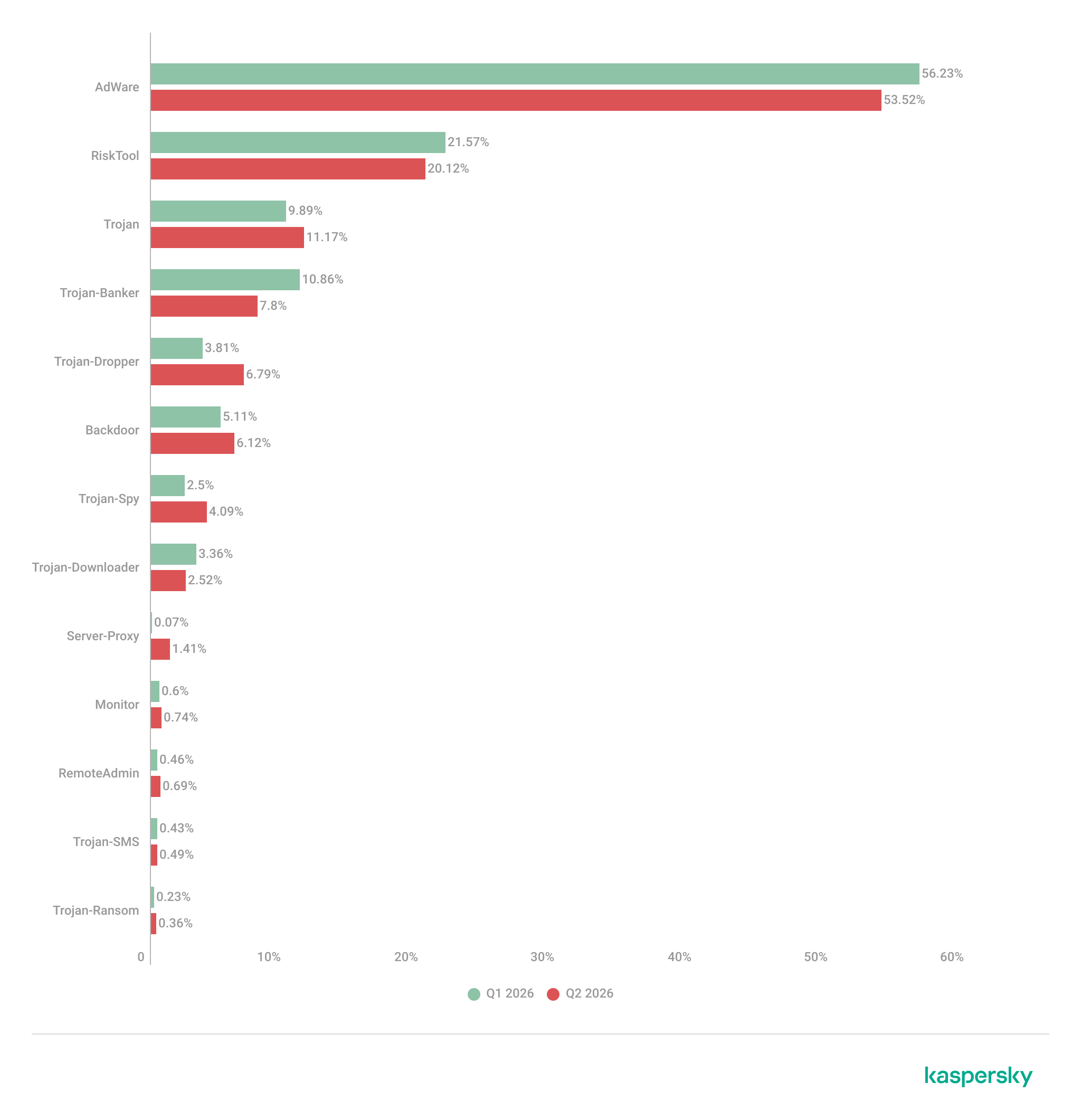
Share* of users attacked by the given type of malicious or potentially unwanted
apps out of all targeted users of Kaspersky mobile products, Q1 — Q2 2026 (download)
*
The total may exceed 100% if the same users experienced multiple attack types.
Within the adware category, the sharpest declines were observed in the HiddenAd
and MobiDash families. Meanwhile, the proportion of users targeted by Trojan-Dropper
malware increased, primarily driven by surges in banking droppers such as
Trojan-Dropper.AndroidOS.Banker and Trojan-Dropper.AndroidOS.Mamont. The
corresponding drop in the Trojan-Banker category is partially explained by a
shift in tactics: several banking Trojans which are now being packed were
subsequently reclassified as droppers.
TOP 20 most frequently detected types of mobile malware
Note that the malware rankings below exclude riskware or potentially unwanted
software, such as RiskTool or adware.
Verdict %* Q1 2026 %* Q2 2026 Difference in p.p. Change in ranking
Backdoor.AndroidOS.Triada.ag 7.09 9.35 +2.25 0
DangerousObject.Multi.Generic. 5.84 5.65 -0.19 0
DangerousObject.AndroidOS.GenericML. 5.51 5.25 -0.26 0
Trojan.AndroidOS.Boogr.gsh 2.15 3.33 +1.18 +9
Backdoor.AndroidOS.Triada.z 3.08 3.23 +0.15 +3
Trojan-Banker.AndroidOS.Mamont.hl 1.10 2.48 +1.38 +22
Trojan.AndroidOS.Fakemoney.v 3.44 2.31 -1.13 -2
Trojan-Spy.AndroidOS.Btmob.e 0.00 2.27 +2.27
Trojan.AndroidOS.Triada.fe 2.98 2.18 -0.81 0
Trojan-Dropper.AndroidOS.Banker.dd 0.01 2.16 +2.15
Trojan.AndroidOS.Triada.hf 2.23 1.93 -0.29 +1
Backdoor.AndroidOS.Triada.ad 1.40 1.93 +0.53 +8
Backdoor.AndroidOS.Keenadu.a 2.73 1.88 -0.85 -3
Backdoor.AndroidOS.Triada.ab 1.72 1.79 +0.07 +2
Trojan-Banker.AndroidOS.Mamont.iv 1.03 1.63 +0.60 +16
Trojan.AndroidOS.Generic. 1.32 1.47 +0.15 +7
Backdoor.AndroidOS.Triada.ae 1.76 1.44 -0.31 -2
Trojan.AndroidOS.Fakemoney.ej 0.00 1.43 +1.43
Trojan.AndroidOS.Triada.ii 2.07 1.41 -0.66 -5
Trojan-Spy.AndroidOS.Agent.asa 0.02 1.38 +1.36
* Unique users who encountered this malware as a percentage of all attacked
users of Kaspersky mobile solutions.
The distribution of top malware families in Q2 largely mirrors the rankings from
the previous reporting period. Newer variants of the Mamont banking Trojan
climbed the leaderboards, displacing older iterations. This shift points to
ongoing, active development of new variants by the threat actors behind the
malware.
Mobile banking Trojans
In Q2, the total volume of Trojan-Banker applications dropped sharply compared
to the previous quarter, totaling 93,574 installation packages.
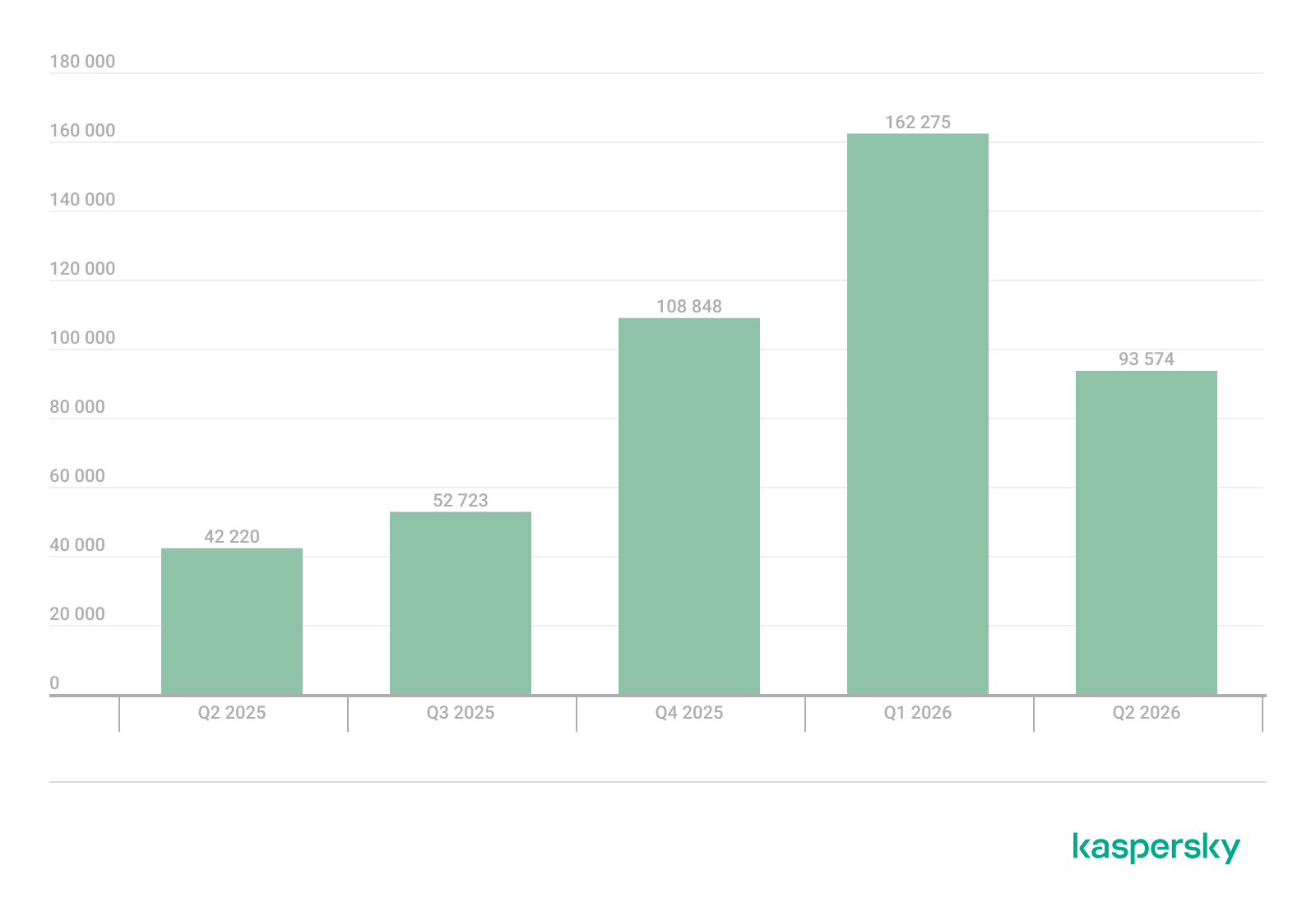
Number of installation packages for mobile banking Trojans detected by
Kaspersky, Q2 2025 — Q2 2026 (download)
Against the backdrop of this trend, the distribution shifted heavily toward
Creduz Trojans. However, as noted earlier, this shift was not reflected in real-world
attack metrics: virtually the entire leaderboard by proportion of targeted users
continues to be dominated by diverse Mamont variants.
TOP 10 mobile bankers
Verdict %* Q1 2026 %* Q2 2026 Difference in p.p. Change in ranking
Trojan-Banker.AndroidOS.Mamont.hl 3.27 11.13 +7.86 +6
Trojan-Banker.AndroidOS.Mamont.iv 3.08 7.33 +4.25 +6
Trojan-Banker.AndroidOS.Mamont.mv 0.00 5.12 +5.12
Trojan-Banker.AndroidOS.Agent.ws 3.78 4.99 +1.22 +2
Trojan-Banker.AndroidOS.Mamont.mg 0.35 4.71 +4.36 +62
Trojan-Banker.AndroidOS.Faketoken.pac 2.56 4.10 +1.54 +6
Trojan-Banker.AndroidOS.Mamont.jo 15.75 3.73 -12.02 -6
Trojan-Banker.AndroidOS.Mamont.mc 0.83 3.51 +2.67 +26
Trojan-Banker.AndroidOS.Mamont.lf 0.00 2.79 +2.79
Trojan-Banker.AndroidOS.Agent.eq 0.89 2.58 +1.69 +23
* Unique users who encountered this malware as a percentage of all users of
Kaspersky mobile security solutions who encountered banking threats.